
My Spinach Always Goes Bad: How Our Urban Environment Affects the Way We Shop for Groceries
Written by Brett Williams
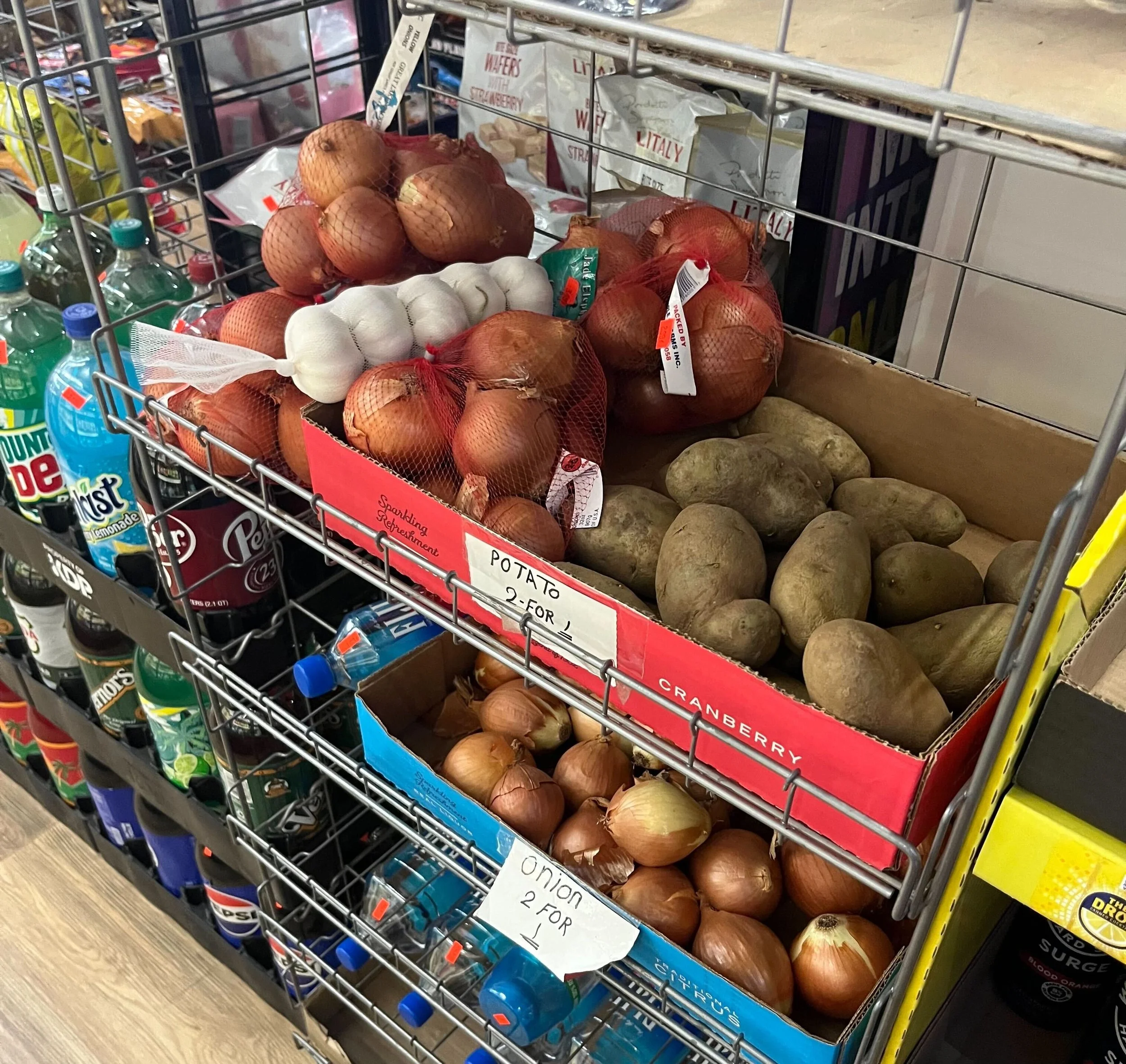
You may not like it, but this is peak grocery store performance (Produce in Soussy Market on North 4th Street) (Photo by author).
Not long after I began working in the Produce department of Whole Foods Market about four years ago, my team got a new supervisor who was transferring from another department. He told me he’d been warned by another coworker who seemed to have some kind of existential dread about Produce. I guess the coworker told him that working in this department was stressful because “everything is dying all the time.” I said that was a little dramatic - and it is - but it’s not totally wrong. As soon as fruit and vegetables are picked, a ticking clock starts and the food has a limited time to make its journey from the farm to our stomachs. And unfortunately, a lot of it doesn’t make it all the way.
Grocery stores themselves contribute to the bulk of waste, but a lot of food goes bad sitting in our own homes after we buy it. A study conducted by Elena Belavina at Cornell University suggested that a city increasing its grocery store density up to a certain point can cause a significant reduction in food waste, largely driven by changes in consumer spending. Since stores create so much waste, it would seem contradictory to suggest that adding more stores would reduce it, but Belavina’s research showed that it can, mostly on the consumer’s end.
An average family of four in the US throws away $2,000 worth of food or more each year. And it’s not their fault! Life is busy, and we have a lot of stuff to do between our weekly grocery trips that can get in the way of focusing on conserving our food. Grocery shopping is a hassle, and most of us are in a hurry, so we load up our carts with everything we can and get out of there.
Obviously, the goal is to make use of all of it - but nothing ever goes according to plan elsewhere in our lives, so why would it with your groceries? You might forget an essential ingredient for something you were planning to make. You might work late evening and come home so burnt out that you skip meal prep entirely and order Pad Thai instead, while your once-fresh produce sits in the fridge, withering away. Whatever the reason, not everything you buy gets put to use. And when you have to drive to the store, every bit of wasted food is a little bit of wasted gas money too.
Does it have to be this inconvenient? Of course not.
If every family had a grocery store within walking distance, or even a short bus trip away, they could go back the next day to grab that ingredient they forgot. Or better yet, stop in every few days for a smaller purchase that they won’t end up tossing out. Easier access to grocery stores allows people to make smaller, more frequent trips, rather than brave the big box parking lots once a week to spend $300 on a grocery haul that will likely go bad before they get a chance to use all of it.
The Whole Foods store in Upper Arlington, where I work, along with its neighbors in the Shops on Lane retail complex, is surrounded by single and multi-family housing. Two five-story apartment complexes directly across the street and another about two blocks down the road contain nearly 500 apartment units, in addition to the blocks of single-family homes in the surrounding neighborhood. Its relatively accessible setting allows its clientele (and many of its employees) to walk there, which can’t really be said for the company’s other two Columbus area locations (one on Morse Road near Easton and the other at the intersection of 161 and Sawmill Road in Dublin)
Not every community is like Upper Arlington though, and we don’t have to clear the way for a Whole Foods, Kroger or Giant Eagle in every neighborhood. There are plenty of smaller shops, like Charmy’s in the Discovery District downtown and Maravillas Mexican Market in Harrison West, that fit snugly into the neighborhoods they serve. Even some convenience stores, like Soussy Market on North 4th Street in the campus area, have small selections of fresh produce.
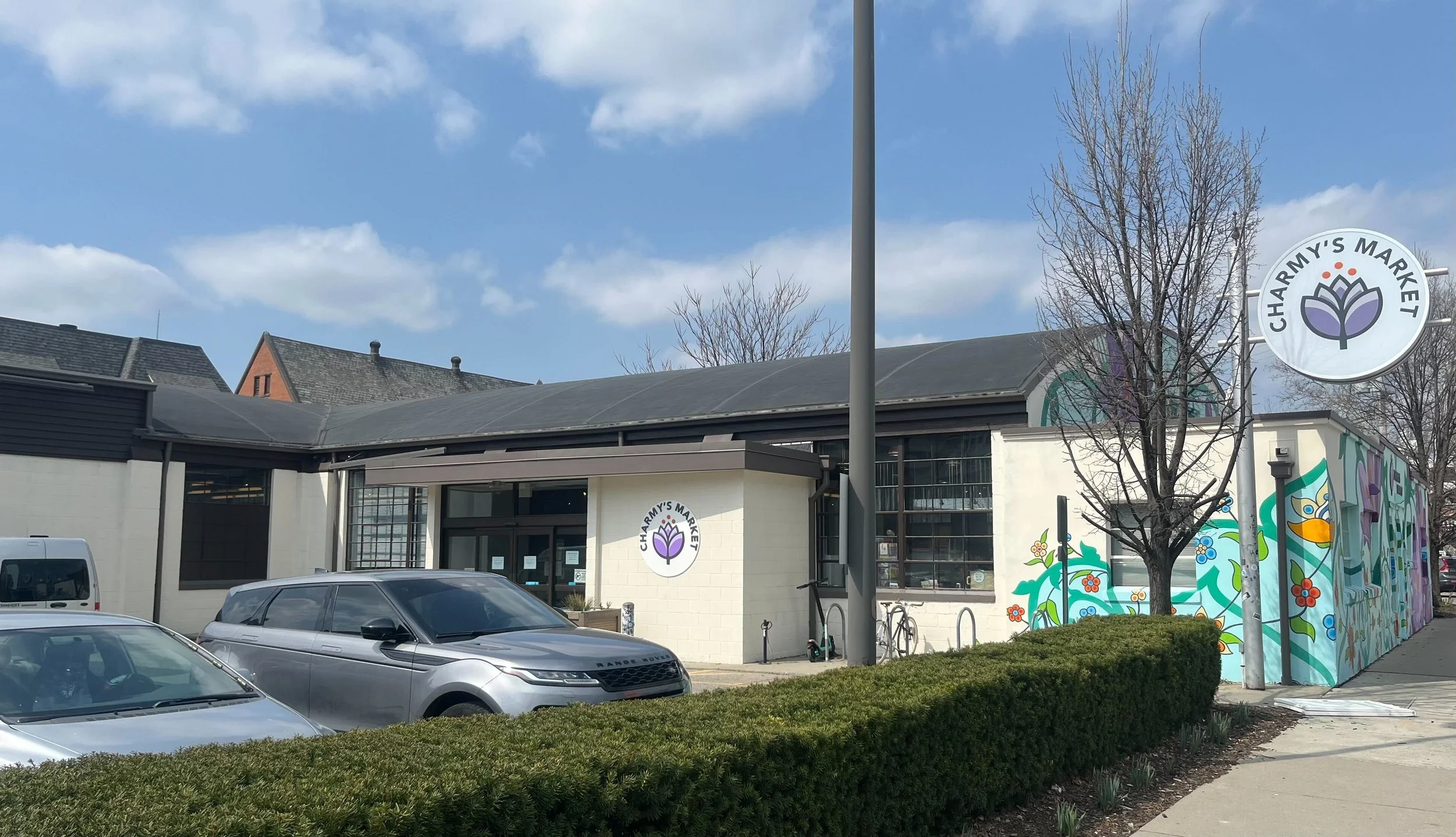
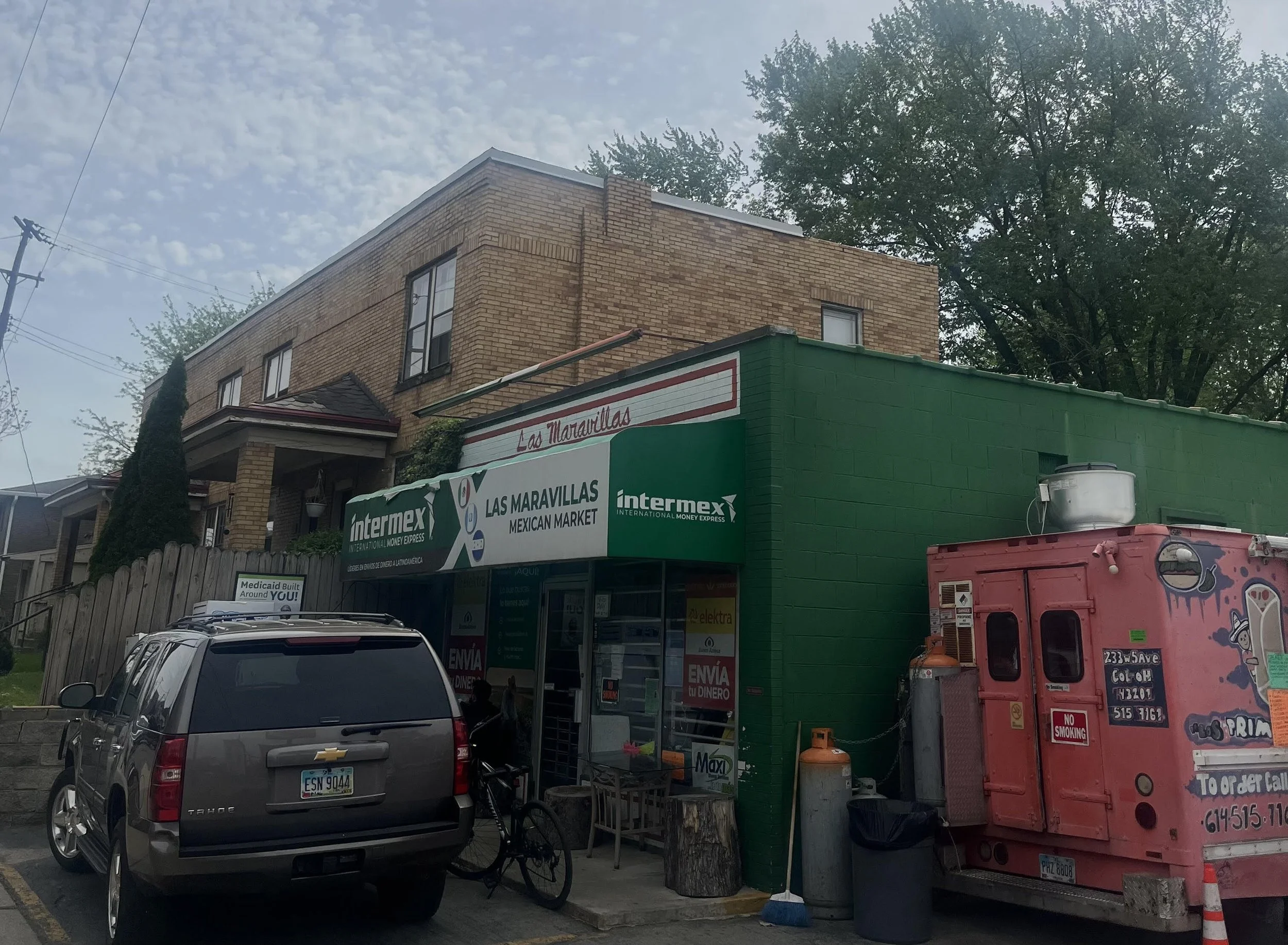
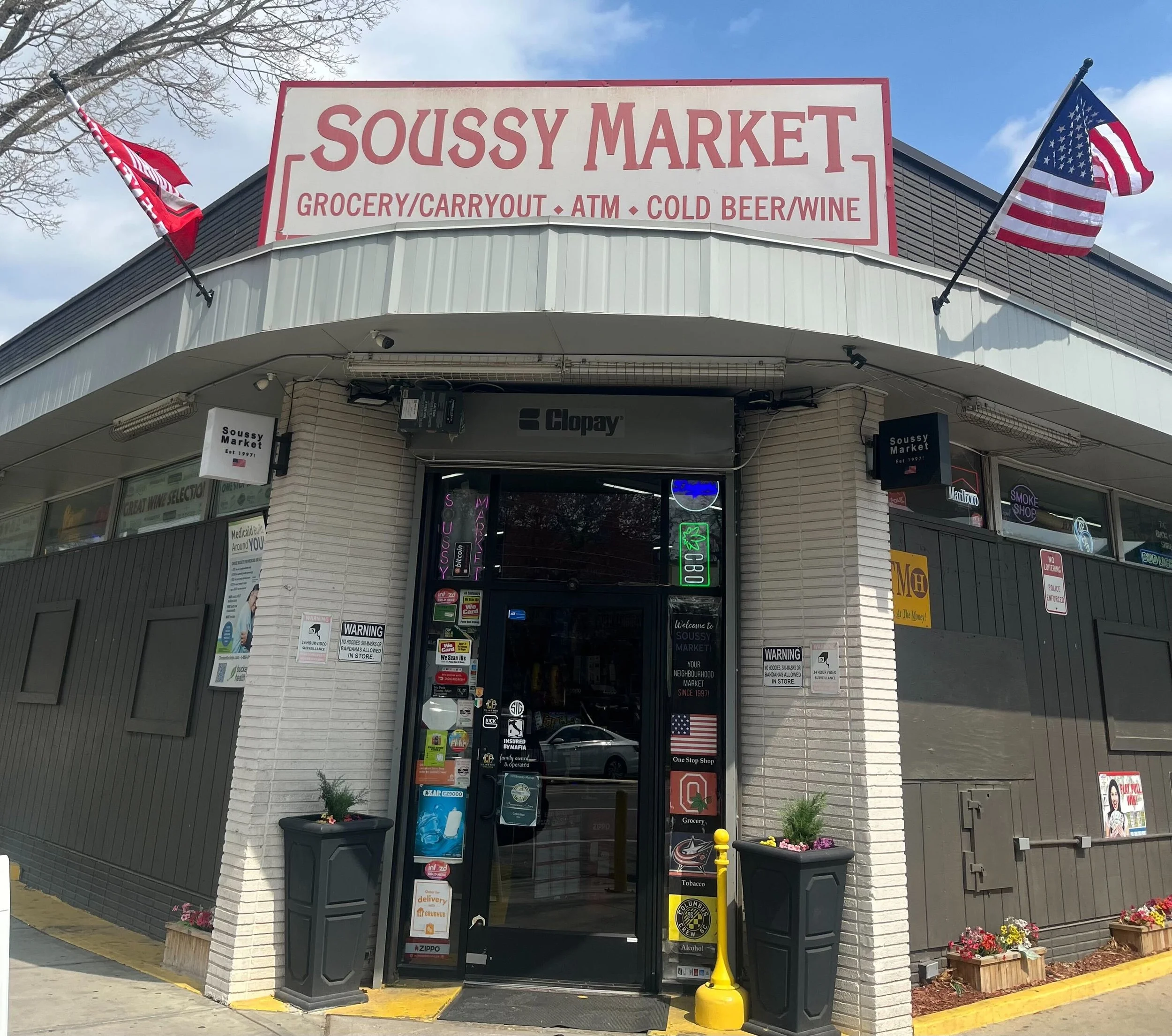
Slideshow of 1) Charmy’s in the Discovery District downtown, 2) Maravillas Mexican Market in Harrison West, and 3) Soussy Market on North 4th Street (Photos by author).
I don’t live within walking distance of the Upper Arlington Whole Foods myself, but working there five days a week still gives me an advantage in reducing my own food waste that not everyone has. There’s no reason that my leg up on waste-free shopping can’t be given to everyone. Prioritizing transit, walkability and safer streets can make everything, including grocery shopping, more convenient and less wasteful for all of us.